The NABC Value Creation Framework
This concept was last updated November 03, 2025
In 1998, the Stanford Research Institute (SRI) was on the verge of bankruptcy.
Over the next 16 years, SRI tripled in size, creating a range of innovations like Siri and the da Vinci Surgical System.
What happened?
The NABC Framework
When Curtis Carlson joined SRI as its CEO in 1998, he drove a cultural transformation for the company.
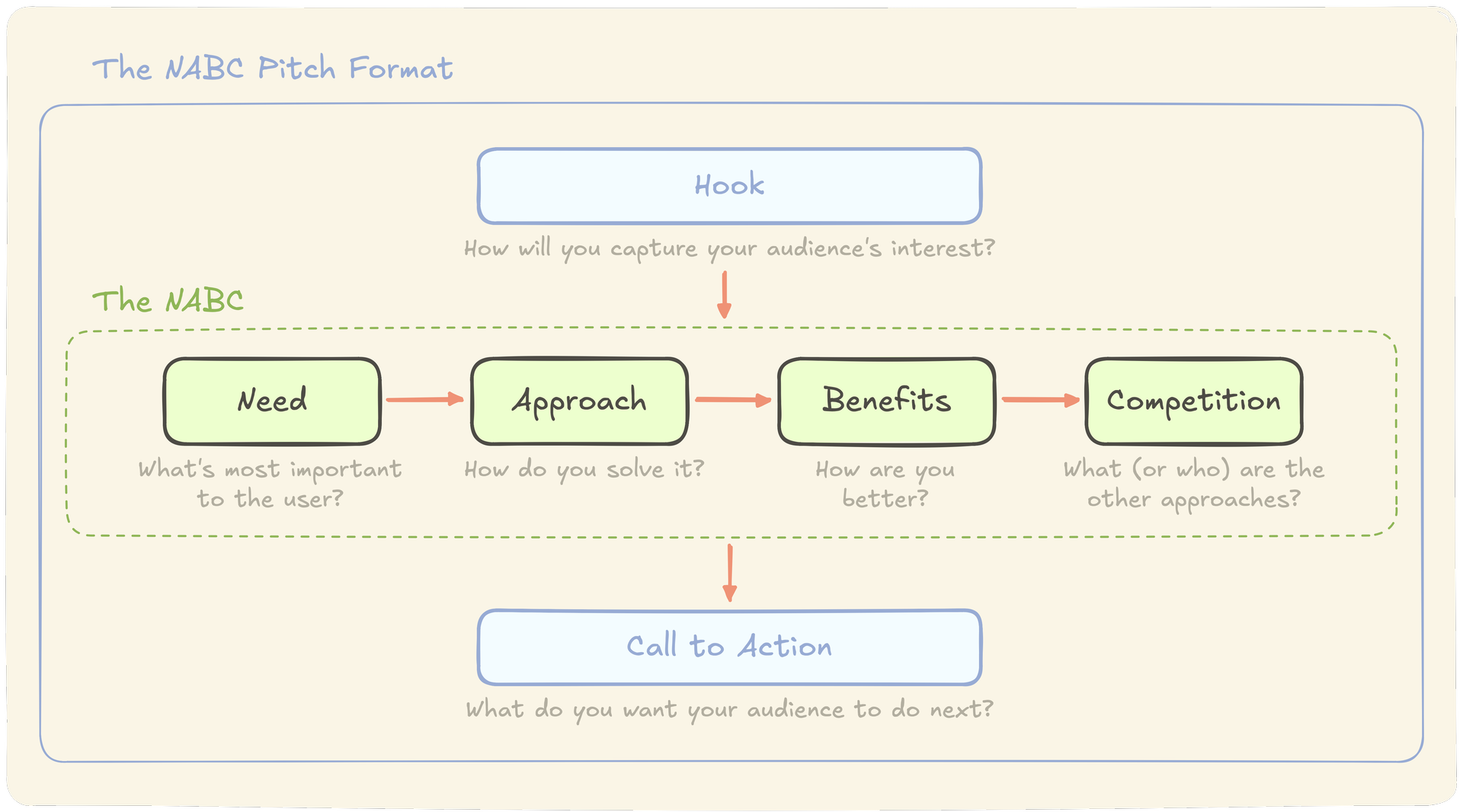
This transformation was driven by the NABC framework, which tasks inventors with answering four questions:
Need: What's the most important thing to the user and the market?
Approach: What's your unique approach, and your key insight into the need?
Benefits: What are the specific advantages to the user?
Competition: How do these advantages differ from alternatives approaches?
These answers are combined with an attention-grabbing hook and a call-to-action to form a complete NABC Pitch, tailored to a specific stakeholder.
Putting It to Work
I learned this framework directly from Curt over two years as part of my innovation fellowship with him at Worcester Polytechnic Institute.
Each week, 3~6 founding teams (including mine) would meet as a forum to present our NABC pitches. We'd give each other feedback by role-playing different stakeholders, and then iterate on our pitches.
Since then, from my startups to my enterprise work at places like Thoughtworks and Wayfair, I've used this framework to ensure my teams are creating real value for their organizations.
Takeaway
Next time you're creating something for others, give this framework a try: One of my favorite activities is to ask every member of a team to build an NABC pitch for their product.
The discussions and realizations that follow are often incredibly enlightening.
© With Caer, LLC 2026
